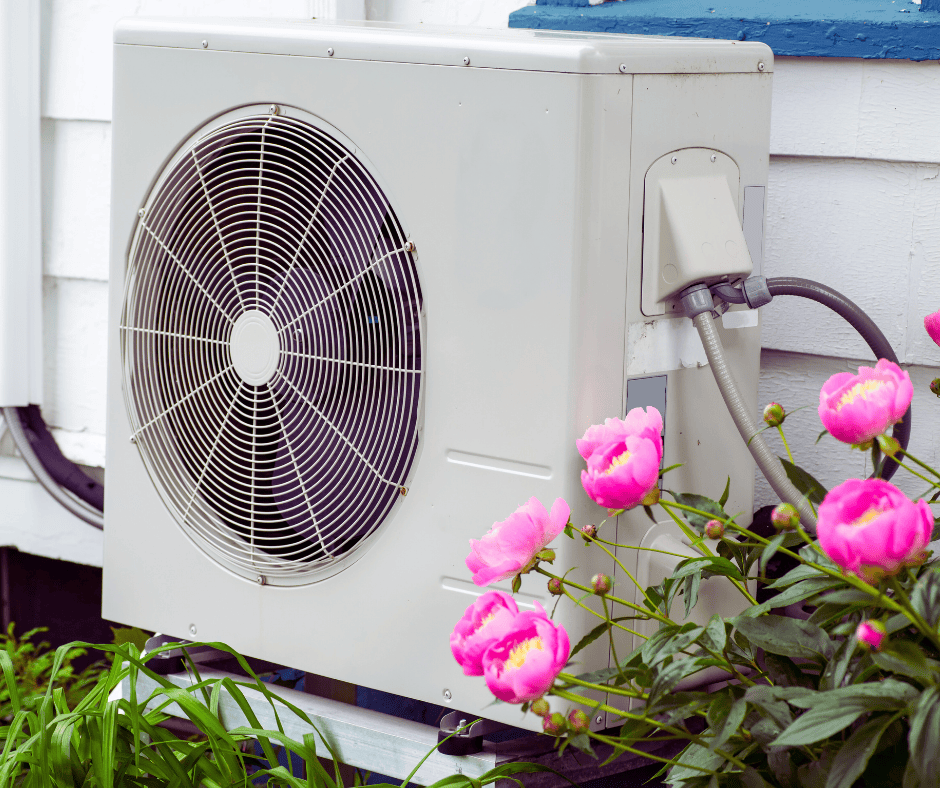
Heating and cooling load differs across the Ogden valley floor near 4,300 feet, the East Bench around 4,500 to 4,800 feet, and the Ogden Valley above 5,000 feet, so equipment is sized to the location.
From December through February, cold air settles at the valley floor under a warm cap and traps PM2.5, with Weber County readings regularly passing the EPA 24-hour standard of 35 micrograms per cubic meter.
Qualifying cold-climate heat pumps keep efficient heating output well into cold weather, which makes them a practical option for Ogden homes when paired correctly with backup heat.
Elevation is the factor most homeowners overlook, and it has a direct effect on equipment sizing. The Ogden valley floor sits near 4,300 feet, the East Bench climbs to roughly 4,500 to 4,800 feet, and the Ogden Valley near Pineview Reservoir runs above 5,000 feet. Air density, temperature patterns, and both the heating and cooling demand all shift across those tiers, so the very same house can need different capacity depending on exactly where it sits. Ogden HVAC done well starts from that fact.
This is why a proper Manual J load calculation matters so much here. Manual J is the industry method that sizes equipment to a home's actual heating and cooling load, measuring square footage, insulation, windows, orientation, and air leakage rather than copying the size of the old unit. In a market with this much elevation variation, a load calculation is the difference between a system matched to the home and one that is guessed at. A contractor handling HVAC in Ogden should always run it.

Winters on the Wasatch Front are long and cold, and they run colder and longer at elevation. A furnace in an Ogden home works hard for months, and a property up toward the Ogden Valley faces single-digit mornings that a valley-floor home rarely sees. That heating demand shapes equipment choices, from furnace capacity to whether a heat pump makes sense and how it should be configured for the cold.
Heat pumps have become a real option for HVAC in Ogden, but the cold-climate reality has to be respected. Cold-climate heat pumps hold efficient output well into cold weather, and many homeowners pair one with a gas furnace in a dual-fuel setup so the furnace takes over on the coldest nights below the balance point. A contractor who understands the local winters configures these systems correctly, rather than installing a unit that runs expensive electric backup heat all season long. The difference shows up on every January utility bill, and it is a direct result of whether the installer accounted for the cold-climate reality at the home's elevation.
Summer flips the demand. The Ogden valley floor sees stretches of ninety-degree heat, and a cooling system has to hold a comfortable indoor temperature through the hottest part of the afternoon. An air conditioner that was oversized in a rush short-cycles, turning on and off too quickly, which wastes energy and leaves humidity and comfort problems behind. A right-sized system, by contrast, runs in longer and steadier cycles and keeps the whole home comfortable through the hottest part of the peak afternoon.
This is where the refrigerant transition enters the picture for anyone considering Ogden HVAC work. New air conditioners and heat pumps made on or after January 1, 2025 moved off the long-standing R-410A refrigerant to the lower global warming potential R-454B. A system installed a few years ago runs on different refrigerant than one installed today, which affects parts, service availability, and how a homeowner should think about the timing of a replacement. A local expert can explain what that means for a specific home.
The most distinctive part of the local climate is the winter inversion. From December through February, cold air settles at the valley floor under a warm cap, trapping fine particulate matter, known as PM2.5, close to the ground. Weber and Davis County readings regularly climb toward and past the EPA 24-hour standard of 35 micrograms per cubic meter during long inversions, and the valley floor sometimes ranks among the worst in the country for those stretches.
That outdoor reality becomes an indoor problem, because particulates infiltrate the home, and it makes air quality a genuine part of HVAC in Ogden rather than an afterthought. Higher-MERV filtration captures more of the fine particulates, though the higher grades raise airflow resistance, so the system has to be matched to handle it. Whole-home filtration, air handlers, and related equipment give a home a real defense during inversion weeks, which is a local need a generic approach tends to ignore.
All of these factors point to the same conclusion. A company that works HVAC in Ogden every day understands how elevation changes the load, how the winters and summers stress a system, and how the inversion season affects the air inside a home. That knowledge shapes better recommendations, faster diagnosis, and systems that actually fit the homes they serve, from central Ogden near Historic 25th Street to the hillside properties toward Snowbasin and Pineview Reservoir.
A company without that grounding can still install a box, but it is more likely to miss the details that matter here. The elevation tier, the winter heating demand, the summer cooling peak, and the inversion-season air all deserve attention, and a local expert weighs each of them as a matter of routine. For a homeowner, choosing a provider who treats Ogden HVAC as a local specialty rather than a generic job is the surest way to a comfortable, efficient home.


The age of a home adds another layer to the local picture. Central Ogden and the older neighborhoods hold houses built decades ago, many with original or aging ductwork, uneven insulation, and additions that were never balanced into the system. Newer construction in Farr West, Clearfield, and parts of Layton is tighter and more uniform, which changes how a system should be sized and how air moves through the house.
A local company reads those differences. An older ranch in Washington Terrace or central Ogden may need duct repair or sealing before new equipment can perform to its rating, while a tight newer home may need attention to fresh-air and humidity balance. Treating every house the same ignores what the building itself is telling the technician, and it is one more reason local experience with the full range of Ogden housing stock matters when choosing a contractor.
Equipment gets the attention, but the duct system quietly determines how well it works. Leaky or poorly designed ducts waste conditioned air into attics and crawl spaces, so a home can have efficient equipment and still feel uneven room to room. In the older parts of the Ogden area especially, duct sealing, repair, or redesign is sometimes the change that makes the biggest difference to comfort and to the energy bill.
A thorough local approach looks at the whole system rather than just the box outside. Assessing the ductwork, the insulation, and the airflow alongside the equipment gives a homeowner a solution that performs as designed. A new furnace or air conditioner tied to leaky ducts never delivers its full value, which is why a local expert evaluates the distribution side as carefully as the equipment itself.
When a system is sized and installed correctly for its location, the payoff shows up every day. The home holds a steady temperature, the equipment runs in longer and more even cycles rather than short bursts, energy is not wasted, and the components last closer to their full expected life. Comfort feels almost effortless because the system is matched to the actual measured load rather than constantly fighting a size that never fit the house in the first place.
The opposite is equally visible. An oversized or undersized system, common when sizing is guessed rather than calculated, brings uneven temperatures, higher bills, humidity issues, and parts that wear out early. For anyone investing in a new system here, right-sizing is not a technical nicety. It is the foundation of whether the system performs well for fifteen years or frustrates the household for its whole life, which is why the load calculation is worth insisting on.
Local knowledge also helps a homeowner plan the timing of work. Replacing a furnace before winter or an air conditioner before summer, rather than in the middle of a failure, means the job is done on the homeowner's schedule with time to consider the options. A company that knows the Weber and Davis County calendar can help a homeowner get ahead of the seasonal rush rather than competing for an emergency slot during the first cold snap or heat wave.
That planning extends to maintenance. Servicing the air conditioner in the spring and the furnace in the fall keeps each system ready well before its hard season arrives, which is a maintenance rhythm that fits the local climate closely. Approaching home comfort as something to manage across the year, rather than react to when it breaks, is the mindset that keeps a home comfortable and keeps costs predictable, and a local provider helps a homeowner build that habit.

Skipping the local factors carries a real price. A system sized without regard to elevation, installed without sealing leaky ducts, or chosen without accounting for the inversion season underperforms from day one. The homeowner pays for it in higher bills, uneven comfort, early part failures, and sometimes a full replacement years sooner than necessary. These are not rare outcomes when a job is rushed or handled by a company unfamiliar with the area.
Getting HVAC in Ogden right the first time avoids all of that. A load calculation matched to the elevation, a duct assessment, correct equipment selection, and attention to air quality together produce a system that performs as intended. The extra care at the start is modest compared to the cost of living with a poorly matched system or replacing it early, which is why local expertise is worth finding rather than defaulting to the lowest bid.
Homeowners who want that local grounding can rely on One Hour Ogden. As an independently owned and operated One Hour franchise serving Ogden and the greater Weber and Davis County market, the company is Utah Licensed, Bonded, and Insured, staffs EPA, RMGA, and BPI certified technicians, and backs its work with the Always On Time Or You Don't Pay A Dime promise, StraightForward Pricing with no hidden fees, and a 100 percent satisfaction guarantee, earning a 5 star rating across 568 plus Google reviews. For HVAC in Ogden matched carefully to the local climate and elevation, homeowners can call (801) 829-7633.
From the valley floor in central Ogden to the higher ground near Huntsville and the Ogden Valley, One Hour Ogden brings the elevation-aware sizing and local knowledge the market calls for, backed by 24/7 emergency availability. Because every home and location is different, the right next step is an on-site evaluation and an upfront quote rather than a number over the phone.
Redirect to:
|
This page is a redirect. The following categories are used to track and monitor this redirect:
|